

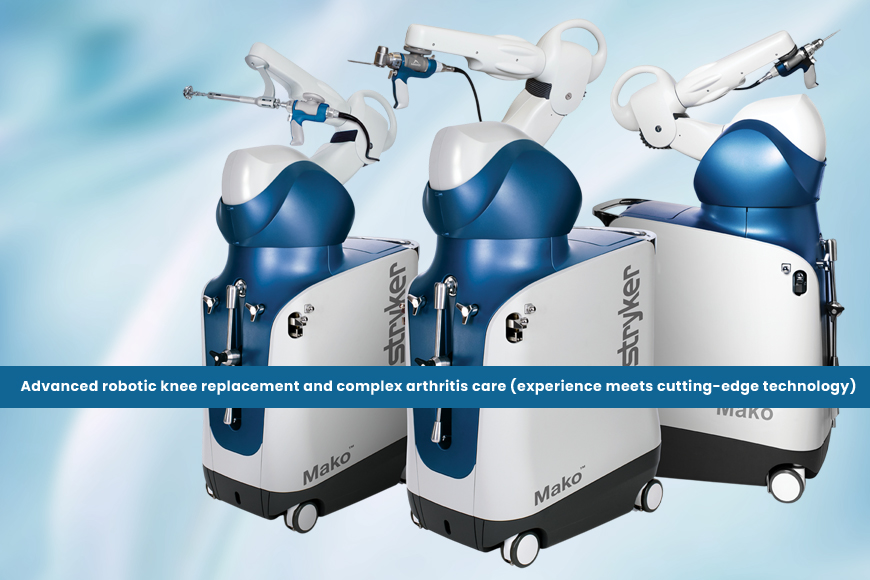
How Mako Robotic Knee Replacement Works: Step-by-Step Guide for Patients in Bangalore
Patients often ask: “What actually happens during surgery?” or “Is there a safer, more precise option?”
This is where robotic knee replacement Bangalore searches have increased. People are looking for clarity, safety, and better outcomes not just surgery. One of the most advanced options today is Mako robotic knee replacement, a technique designed to make the procedure more accurate, more personalized, and easier to recover from.
What Is Mako Robotic Knee Replacement?
Mako robotic knee replacement is an advanced form of knee replacement surgery that uses a robotic system to assist the surgeon but it’s important to understand one thing clearly:
👉 It is NOT an automatic surgery. The surgeon is always in full control.
Here’s how it works in simple terms:
- A 3D model of your knee is created before surgery
- The surgeon plans the procedure in detail
- During surgery, a robotic arm assists with precision
This combination of planning + precision allows for a highly customized procedure.
When performed by experienced specialists like Dr. Deepak Inamdar, this approach can significantly improve surgical accuracy and patient outcomes.
Why Mako? (Robotic Knee Surgery Benefits)
Patients often compare traditional vs robotic surgery. Here’s why many are choosing robotic approaches today:
Key robotic knee surgery benefits:
- Better precision – Surgery is planned and executed with high accuracy
- Less damage to surrounding tissue – Helps reduce pain after surgery
- Faster recovery – Patients often regain mobility sooner
- Improved implant alignment – Leads to better long-term results
- Personalized surgery – Designed specifically for your knee anatomy
👉 Compared to traditional knee replacement surgery, robotic assistance helps reduce guesswork and improves consistency.
Step-by-Step: How Mako Robotic Knee Replacement Works
This is the most important part patients want to understand. Let’s break it down clearly.
Step 1: Pre-Surgery CT Scan & Planning
Before surgery, a CT scan is done to create a 3D model of your knee.
- This helps map your exact bone structure
- A personalized surgical plan is created
👉 What patients feel:
No discomfort just a normal scan. But this step gives confidence because the surgery is planned in advance.
Step 2: Surgical Planning
Using the 3D model:
- The surgeon decides the implant size and position
- Every detail is customized to your body
👉 What patients feel:
Reassurance. Instead of a “standard approach,” your surgery is tailored specifically for you.
Step 3: During Surgery (Robotic Assistance)
In the operation theatre:
- The surgeon guides the robotic arm
- The system ensures high precision bone preparation
👉 What patients feel (post-surgery awareness):
Less trauma to surrounding tissues often means reduced pain and swelling compared to traditional methods.
Step 4: Implant Placement
- The implant is placed with accurate alignment
- This improves joint movement and durability
👉 What patients feel:
Better stability and natural movement over time.
Step 5: Post-Surgery Recovery
- Early movement begins soon after surgery
- Rehabilitation is structured and controlled
👉 What patients feel:
Gradual improvement in mobility, with support from physiotherapy.
Is Mako Surgery Safe?
Safety is one of the biggest concerns and rightly so.
Here’s what you should know:
- Proven technology used worldwide
- Widely adopted in advanced orthopedic centers
- Surgeon remains fully in control at all times
- Robotic assistance helps reduce human error
👉 In simple terms, the robot doesn’t replace the doctor it enhances precision.
Who Is the Right Candidate?
Not everyone needs robotic knee replacement surgery.
You may be a good candidate if you have:
- Severe knee arthritis
- Chronic knee pain affecting daily life
- Difficulty walking, climbing stairs, or standing
- Failed non-surgical treatments (medication, physiotherapy)
👉 This helps ensure the treatment is right for your condition not just trending technology.
Recovery Timeline: What to Expect
Recovery is one of the most searched topics and for good reason.
Day 1
- Standing and walking (with support) often begins
- Pain is manageable with medication
Week 2-4
- Mobility improves gradually
- Walking becomes easier
- Physiotherapy continues
6 Weeks+
- Return to most daily activities
- Strength and confidence increase
Why Choosing the Right Surgeon Matters
Technology is important but experience matters more.
A skilled orthopedic surgeon in Bangalore ensures:
- Correct diagnosis
- Proper surgical planning
- Smooth recovery guidance
When choosing the best orthopedic doctor Bangalore, consider:
- Experience in knee replacement surgery
- Number of surgeries performed
- Specialization in robotic techniques
- Patient outcomes
Surgeons like Dr. Deepak Inamdar focus on combining experience with technology to deliver better results.
Common Myths vs Facts About Robotic Knee Surgery
Myth 1: The robot performs the surgery alone
👉 Fact: The surgeon controls everything
Myth 2: It’s risky because it’s new
👉 Fact: It’s a well-established, globally used technology
Myth 3: Recovery is the same as traditional surgery
👉 Fact: Many patients experience faster recovery
Myth 4: It’s only for younger patients
👉 Fact: Elderly patients can also benefit
Before vs After Expectations
Before Surgery:
- Constant knee pain
- Limited mobility
- Difficulty with daily tasks
After Surgery:
- Reduced pain
- Improved movement
- Better quality of life
👉 While results vary, most patients notice a significant improvement in daily comfort.
FAQ'S
Pain is managed with medication, and many patients report less discomfort compared to traditional surgery.
Typically 1-2 hours, depending on the case.
Yes, if they are medically fit and evaluated properly.
Usually 15-20 years or more, depending on lifestyle and care.
It offers better precision and personalization, which may improve outcomes.
Most patients begin walking within 24 hours with support.
Take the Next Step with Confidence
Living with knee pain can slowly limit your independence but understanding your options can change everything.
Mako robotic knee replacement offers a more precise, personalized approach that helps many patients recover faster and move better.
If you’re unsure whether surgery is the right step, the best decision is to get clarity not delay.
👉 Talk to an experienced specialist, understand your condition, and explore the best treatment options for your lifestyle.
You can also explore related services like knee arthritis treatment, physiotherapy, and joint care programs to make an informed decision.
The right guidance at the right time can help you get back to living comfortably.
